


Blog
Does My Baby Need Ear Molds? | Baby Ear Corrector Mold Complete Guide

Does my baby need ear molds?
Many new parents spot unusual ear shapes on their newborns and ask: Does my baby need ear molds? Not every differently‑shaped ear requires intervention. A baby ear corrector mold is intended for specific congenital ear deformations. Parents must evaluate visual symptoms, the baby’s age, and seek medical input to decide whether non‑surgical molding is the right choice for their infant.
Key signs your baby may benefit from baby ear corrector mold
Ear molds are mainly designed for cartilage‑fold deformations where all ear tissue is fully developed. When you observe consistent abnormal ear contours that do not fade after several days, it is reasonable to explore non‑surgical reshaping. These persistent irregularities usually appear right after birth and do not improve as swelling fades away.
What visual features indicate a baby should try ear molds?
Your baby may be a candidate for a baby ear corrector mold if you notice protruding ears, lop ears with folded upper rims, cryptotia where part of the ear hides under scalp tissue, cup‑shaped ears, or Stahl’s ear with extra cartilage ridges. These are structural cartilage bends formed during fetal development rather than temporary birth‑related creases.
Cases where ear molds are NOT necessary
Minor natural asymmetry between two ears is common among all people and does not call for ear molds. Temporary creases caused by pressure in the birth canal often resolve within a few days without any tools. Applying a baby ear corrector mold in these unnecessary situations only exposes sensitive newborn skin to extra irritation risks.
Can mild temporary ear folds from birth benefit from a baby ear corrector mold?
No. Temporary folds caused by birth pressure usually disappear within 48‑72 hours as infant swelling subsides. Using a baby ear corrector mold for these short‑term changes brings zero long‑term benefit and may trigger skin redness or rashes. You can simply monitor the ear appearance for several days instead of starting molding treatment.
Age is a critical factor when considering ear molds
Even if your baby shows typical deformity signs, age will determine whether ear molds can deliver permanent results. The highest‑success window for using a baby ear corrector mold falls within the first 6 weeks after birth. After this period, cartilage gradually loses pliability, and expected outcomes drop significantly.
Should you consider baby ear corrector mold if your baby is past 6‑weeks‑old?
Limited partial improvement may still be possible up to three months old, yet results become far less predictable. Professional medical evaluation is strongly advised. If examination shows cartilage has already stiffened, investing time in a baby ear corrector mold will likely waste the remaining opportunity for non‑surgical correction.
Difference between ear deformations and true malformations
It is important to tell deformations apart from malformations. Deformations mean complete ear tissue is present but bent or folded. Malformations involve under‑developed or missing ear tissue, which follows totally different treatment pathways and cannot be fixed by external molding devices.
Will a baby ear corrector mold work for severe ear malformations?
No. A baby ear corrector mold only reshapes existing bent cartilage. It cannot generate missing ear tissue. Serious malformations such as microtia need assessment from pediatric plastic specialists for reconstructive treatment instead of home‑use ear molds.
Why professional assessment matters before buying ear molds
Parental observation is a good starting point, but self‑judgement alone is not reliable. A pediatric or ENT specialist can distinguish temporary birth creases from real structural deformities, confirm if a baby ear corrector mold is suitable, and rule out underlying ear health concerns before you begin any home molding process.
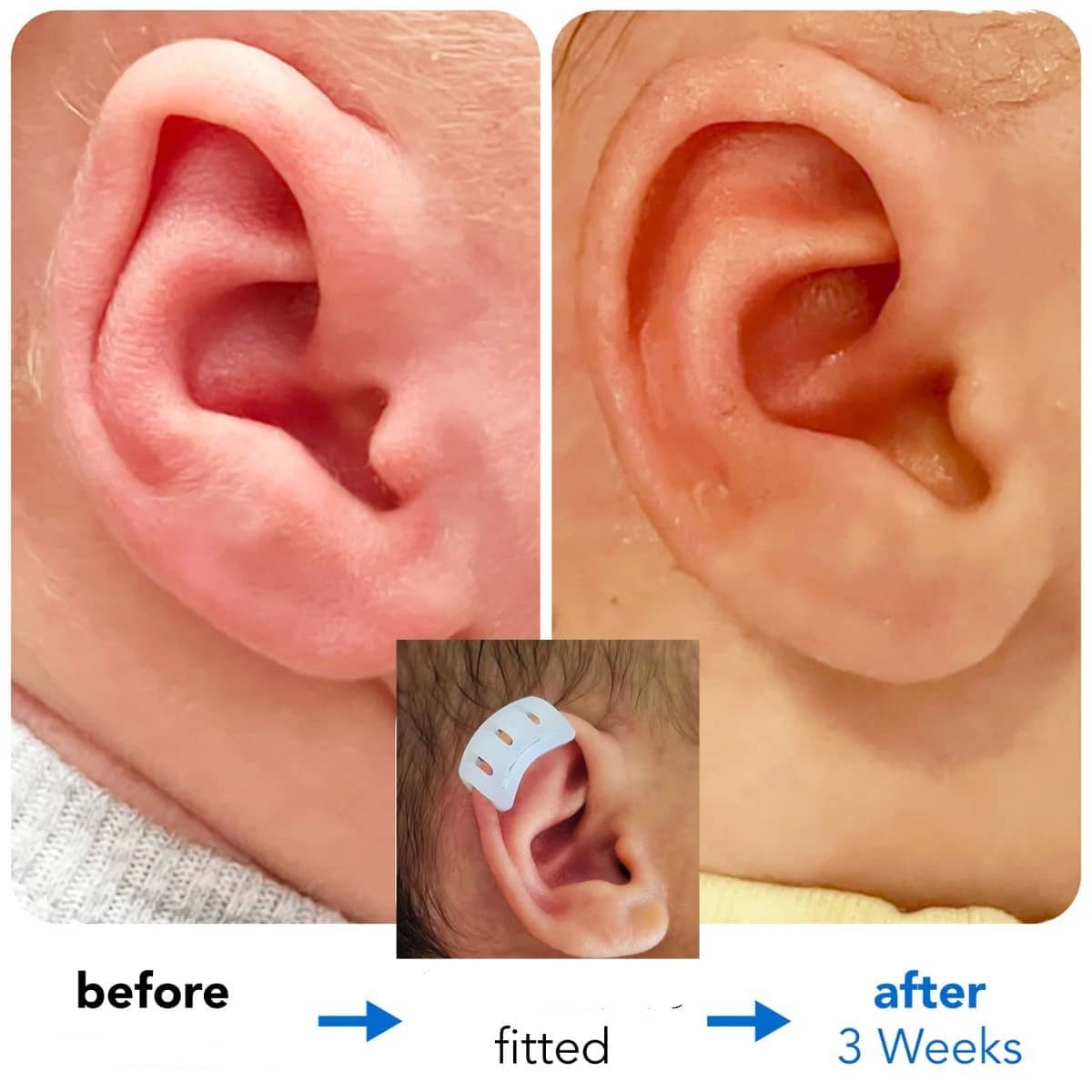
baby ear corrector mold