


Blog
How To Correct Baby Protruding Ears? | Baby Ears Corrector Guide

How to correct baby protruding ears?
Protruding ears are one of the most common congenital ear deformities seen in newborns. Many parents want to know how to correct baby protruding ears without putting their child through surgery. A baby ears corrector offers a non‑invasive solution for eligible infants, yet results heavily rely on timing, proper fitting and professional assessment. It is critical for caregivers to understand how this method works and its realistic boundaries before starting any reshaping process.
Non‑surgical correction for newborn protruding ears with baby ears corrector
Non‑surgical molding is the primary scar‑free approach for young babies with protruding ears. A baby ears corrector is built from soft silicone parts paired with gentle hypoallergenic adhesive tapes. Instead of cutting cartilage, the system holds the outer ear back toward the head and rebuilds the missing anti‑helical fold. With consistent daily wear, pliable neonatal cartilage can harden into a more natural ear position.
How does a baby ears corrector fix protruding ears without surgery?
Protruding ears often happen because the inner fold of ear cartilage fails to form properly before birth. A baby ears corrector applies steady, mild pressure to hold cartilage in the correct folded position. While maternal hormones keep the tissue soft, the cartilage slowly adapts to this new shape. Once hormones reduce and cartilage solidifies, the improved ear position becomes permanent without incisions.
Ideal timing for fixing baby protruding ears
The highest‑success golden window for treating protruding ears runs from 72 hours up to 6 weeks after birth. In this period, cartilage has maximum flexibility, and treatment cycles tend to be shorter. Even after this peak phase, limited improvement may still be possible for some babies, but expectations should be adjusted accordingly.
Can you start correcting protruding ears after the 6‑week golden window?
Some infants up to three months old can still gain partial improvement with a baby ears corrector, but success rates drop. Treatment will require longer weeks of continuous wear. Once babies pass three months of age, cartilage becomes mostly rigid; external molding will only create temporary positioning that reverts once you remove the corrector.
Important prerequisites for non‑surgical protruding ear correction
Non‑surgical molding works only for true cartilage‑based protruding ears where all ear tissue is fully developed. Before purchasing any product, parents should get pediatric evaluation to rule out other ear anomalies. Professional advice also helps confirm whether your baby’s specific case is suitable for a baby ears corrector.
What conditions must a baby meet to use a baby ears corrector for protruding ears?
The baby must still have soft, malleable ear cartilage and complete ear tissue with no missing sections. Skin around the ears should be intact, free from eczema, scratches or active rashes. If the protruding appearance comes from other complex malformations, non‑surgical molding will not deliver satisfying outcomes.
Safety points during home‑based protruding ear molding
Safety should never be overlooked during home ear reshaping. Check ear and surrounding skin every single day. Make sure tapes and silicone pieces are not overly tight. Keep the skin clean and dry before applying the baby ears corrector. Stop usage immediately once skin irritation appears.
What common safety issues can appear while correcting protruding ears?
The most frequent concerns are adhesive‑caused rashes, local pressure red marks and mild skin chafing. In rare situations, ill‑fitted corrector parts may shift and rub against delicate skin. These risks can be reduced with careful monitoring and correct installation guided by medical professionals.
Surgical solution when non‑surgical methods are no longer effective
Once the cartilage hardens and non‑surgical molding is no longer feasible, otoplasty surgery becomes the main permanent treatment for protruding ears in older children. Parents are advised to consult pediatric plastic specialists to learn the appropriate age for surgery, potential risks and expected cosmetic results for their child.
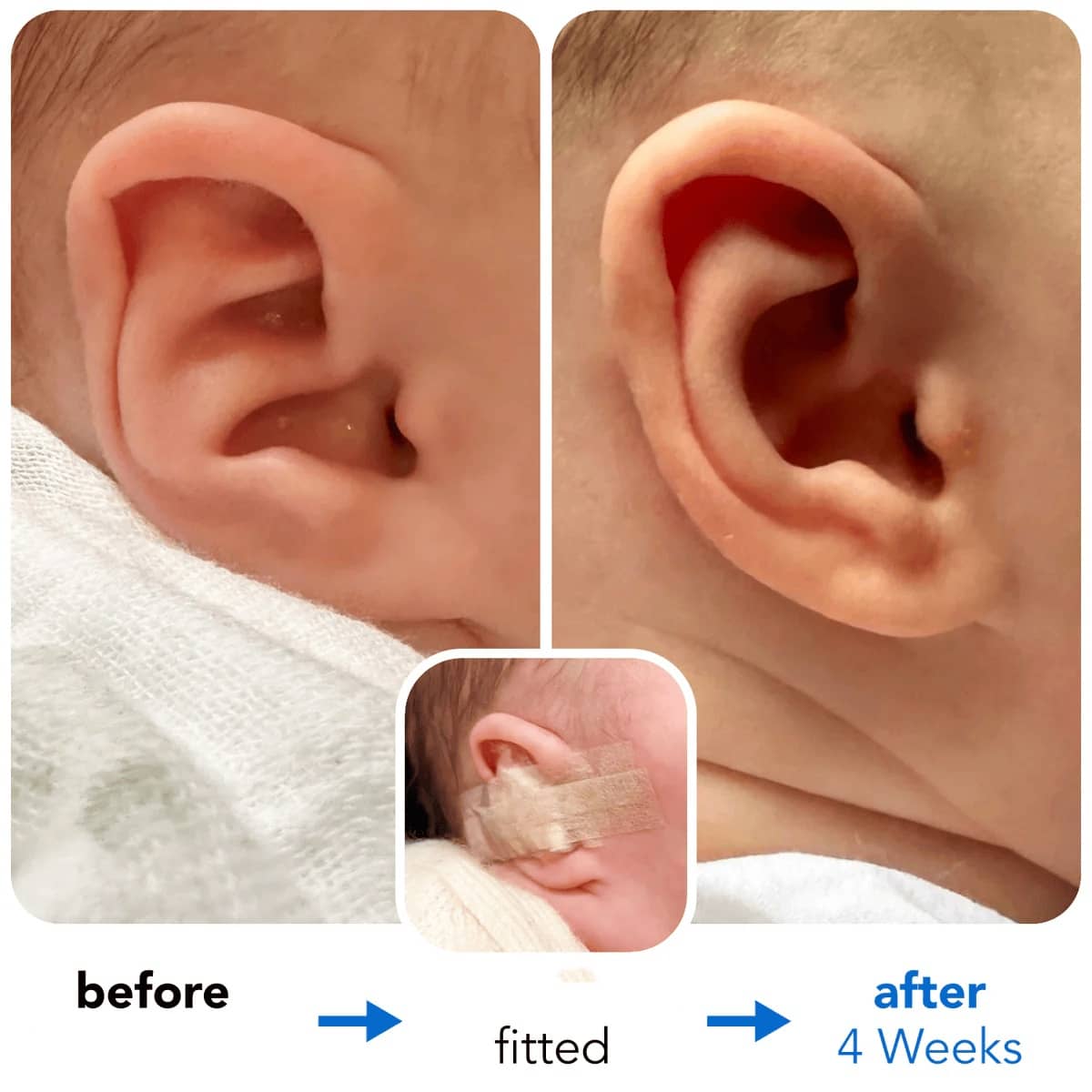
baby ears corrector