


Blog
Can Sleeping Position Affect Ear Shape? | Prominent Ear Baby Guide

Can sleeping position affect ear shape?
Many new parents notice uneven or outward‑tilted ears after their baby sleeps on one side and ask: Can sleeping position affect ear shape? Sleeping posture can create short‑term positional changes to infant ears, but it rarely creates a permanent prominent ear. It is critical to separate temporary sleep‑induced creases from true congenital cartilage deformity when evaluating your newborn’s ear appearance.
How infant sleeping position influences temporary ear appearance
Newborn ear cartilage is soft and flexible. When a baby repeatedly rests their head on one side, external pressure from the mattress can fold or flatten the outer ear. After waking, you may observe bent, creased or slightly protruding ear contours. These shifts happen purely from physical compression while asleep, and they often fade shortly after the baby changes head position.
Can side‑sleeping alone create a permanent prominent ear in babies?
No. Side‑sleeping can cause temporary outward tilting, but it cannot build a true permanent prominent ear. A genuine prominent ear comes from under‑developed inner cartilage folds formed during fetal growth, not only from external sleep pressure. Sleeping posture may make an existing deformity more noticeable, yet it is not the root cause of the condition.
Difference between temporary positional ear changes and congenital prominent ear
Sleep‑related ear creases disappear minutes or hours after pressure is removed. A congenital prominent ear stays consistently outward‑angled no matter how you reposition the baby’s head. True deformity persists throughout awake and sleeping hours, because the cartilage structure itself is formed incorrectly before birth.
How can parents tell sleep‑caused creases apart from real cartilage deformity?
Observe the ear when your baby is awake and lying flat without side pressure. If the ear quickly returns to a natural form, it is just sleep‑related temporary folding. If the ear keeps sticking outward and shows missing inner ear folds even without external pressure, you are likely seeing a prominent ear that needs professional observation.
Sleep pressure and the neonatal soft‑cartilage window
During the first weeks of life, cartilage remains responsive to outside force. Repeated unrelieved pressure during sleep may worsen existing ear folding, but it cannot completely reshape deep‑set congenital cartilage defects. Even in this pliable stage, sleep position acts only as a secondary factor rather than the main source of a prominent ear.
Will changing sleep habits fix an existing prominent ear deformity?
No. Simply switching sleeping positions cannot repair the missing anti‑helical cartilage fold of a prominent ear. Adjusting sleep posture may reduce extra compression, but it will not reverse established structural deformity. Genuine prominent ear requires medical evaluation and possibly non‑surgical ear molding within the early neonatal window.
Practical sleep‑related tips to reduce unnecessary ear pressure
Follow safe infant sleep guidelines first, placing babies on their back for sleep to lower SIDS risk. You can alternate the direction your baby faces each nap time to avoid constant one‑sided pressure on ears. Give supervised tummy‑time while awake, which relieves continuous compression on both ears and the back of the head.
Are special pillows helpful for preventing sleep‑related ear shape changes?
Special shaped pillows are not recommended for infant sleep due to suffocation risks. There is no safe sleep pillow that can reliably protect ear shape. Alternating head orientation during sleep and supervised awake tummy‑time are far safer ways to minimize constant pressure on baby ears.
When to seek medical assessment for unusual baby ear shape
If ear shape abnormalities remain consistent throughout awake periods, do not blame sleeping habits alone. Book a pediatric or ENT check‑up early. Specialists can tell whether you are seeing temporary positional marks or a prominent ear or other congenital deformity, and advise whether non‑surgical molding is appropriate for your baby.
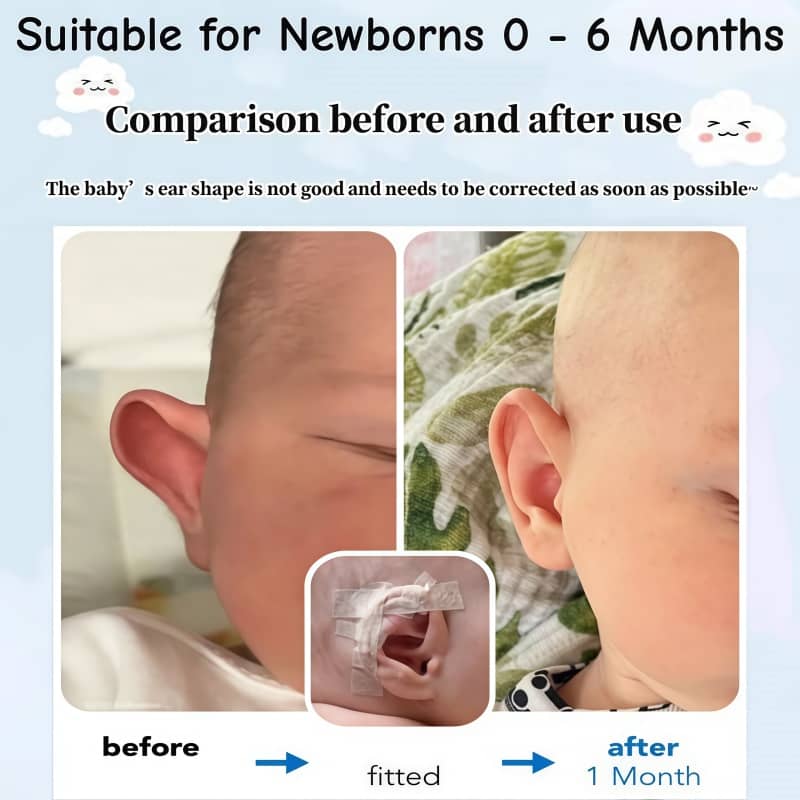
correcting ears that stick out 2