


Blog
How To Correct Ears Without Surgery? | Ear Correction Without Surgery Guide

How to correct ears without surgery?
Many parents want to improve their baby’s misshapen ears and hope to avoid the risks brought by surgical operations. Ear Correction Without Surgery provides a pain‑free alternative for qualified infants. This non‑invasive approach relies on the natural flexibility of neonatal ear cartilage. However, it is not a universal fix for every ear‑shape concern. Parents need to master core principles, applicable cases and safety rules before trying non‑surgical reshaping.
Understanding the principle behind Ear Correction Without Surgery
Ear Correction Without Surgery uses soft silicone‑based molding accessories and gentle medical adhesive tapes, rather than scalpels or sutures. Newborn ear cartilage keeps high elasticity under the influence of residual maternal hormones. The whole idea is to guide cartilage to grow into natural contours, instead of forcibly altering fully hardened tissue.
How does non‑surgical ear reshaping physically work on babies?
Soft silicone splints or stickers hold the infant ear in a desired natural position and deliver mild, continuous pressure. As the baby grows, the pliable cartilage remodels itself and solidifies in the corrected shape. The process is completely pain‑free for babies. It does not damage hearing because these devices only act on the outer ear and will never touch inner‑ear structures.
Suitable ear deformities for Ear Correction Without Surgery
Non‑surgical reshaping works best for congenital folding‑type deformities where the full ear tissue is already present. Common treatable conditions include protruding ears, lop ears with folded upper helix, cryptotia, cup‑shaped ears, Stahl’s ear and conchal crus irregularities. All these problems come from bent or creased cartilage formed during fetal development.
What kinds of ear issues cannot be fixed with non‑surgical methods?
Ear Correction Without Surgery cannot repair severe structural defects such as microtia, where large sections of ear tissue are missing. These serious malformations require assessment from pediatric plastic specialists and may need surgical intervention. Besides, ear damage caused by birth trauma or later accidents also cannot be solved only by external molding tools.
Key steps to perform Ear Correction Without Surgery properly
Successful non‑surgical correction includes several important links. First, get professional evaluation to confirm whether your baby qualifies for molding. Next, select proper skin‑friendly silicone accessories according to the deformity type. Install and secure molds with supporting tape, and keep consistent daily wear. You also need to observe changes regularly during the whole treatment cycle.
Does starting age affect the outcome of non‑surgical ear correction?
Yes, age is one of the most decisive factors. The best effect appears when you start within the first 6 weeks after birth. Visible improvement may still be possible up to 3 months old. Once cartilage hardens completely after 3 months, Ear Correction Without Surgery can hardly create permanent reshaping, even with correct device operation.
Critical safety rules for non‑surgical infant ear reshaping
Safety should always come first when you do home‑based ear reshaping. Clean and dry ear skin before fitting accessories. Check skin status frequently to spot redness or pressure marks. Never stick tapes or place silicone splints over broken, inflamed or eczema‑covered skin. If discomfort occurs, pause usage right away.
What risks should parents watch for during home ear correction?
The most common risks are skin rashes, pressure irritation and adhesive‑caused dermatitis on sensitive baby skin. Improper placement can also create uneven pressure and lead to unsatisfactory reshaping results. Serious complications are rare, but parents should never start molding without consulting medical experts first.
Realistic expectations for non‑surgical ear correction results
Ear Correction Without Surgery brings great possibilities for young infants, yet perfect correction cannot be guaranteed for every case. Individual differences exist among babies. Some infants may only gain partial improvement. If you miss the optimal age window, you will need to discuss surgical otoplasty options with doctors for later childhood.
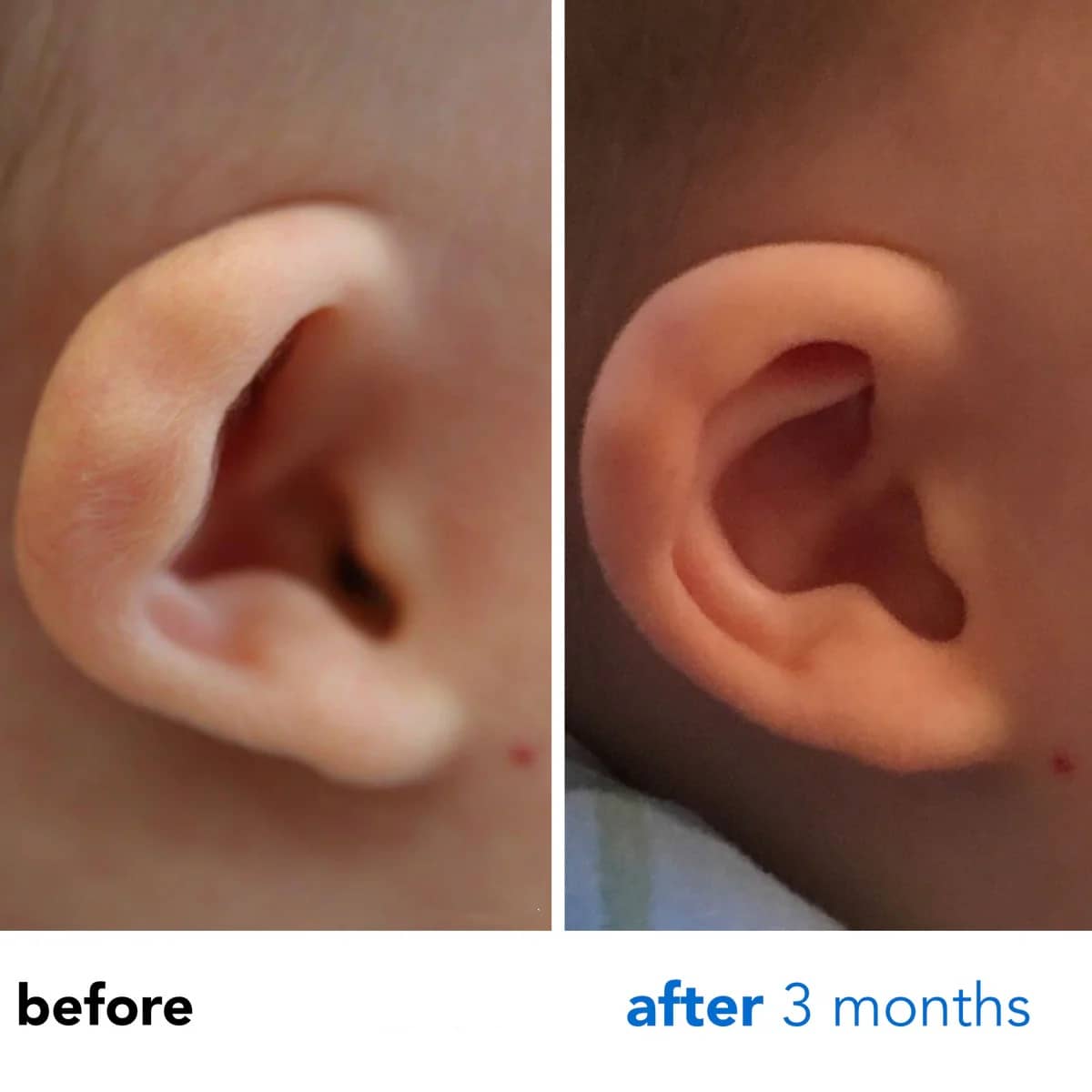
How To Correct Ears Without Surgery? | Ear Correction Without Surgery Guide