


Blog
How Can I Fix Protruding Ears? | Protruding Ear Treatment Guide

How can I fix protruding ears?
Many parents whose babies have a protruding ear want to understand available treatment choices. Fixing protruding ears depends heavily on the patient’s age and cartilage condition. Newborn infants have access to pain‑free non‑surgical reshaping, while older children will mostly rely on cosmetic surgery. Knowing each method’s strengths and limits helps you make well‑informed decisions for your child.
Non‑surgical infant‑focused treatment for protruding ear
For newborns within the optimal biological window, non‑surgical ear molding is the primary scar‑free way to address a protruding ear. This method uses soft silicone molds together with skin‑friendly adhesive tapes. Instead of cutting cartilage, the device holds the ear close to the scalp and rebuilds the missing inner anti‑helical cartilage fold through sustained gentle pressure.
How does non‑surgical molding improve a baby’s protruding ear?
Right after birth, maternal hormones keep infant ear cartilage soft and flexible. The molding setup keeps the ear held in a natural anatomical position 24 hours a day. Over several weeks, as hormone levels drop, cartilage hardens and locks into the corrected shape. This creates permanent improvement for a protruding ear without any incisions or anesthesia.
Timing rules for non‑surgical protruding ear correction
The highest‑success golden period for non‑surgical protruding ear correction runs from 72 hours up to 6 weeks after birth. Cartilage shows maximum pliability during this time frame, and treatment cycles tend to be short. Improvement may still be possible for some babies beyond this window, yet overall success rates drop steadily week by week.
Is non‑surgical reshaping still worthwhile for babies older than 3 months?
Generally no. By three months old, most infant ear cartilage has already hardened. Even if you keep wearing molding accessories, you can only achieve temporary positioning. Once you remove the molds, the protruding ear will revert back to its original outward‑projecting shape, so non‑surgical methods cannot deliver permanent results at this stage.
When surgical otoplasty becomes the viable solution
Once the neonatal cartilage‑soft window closes, otoplasty surgery becomes the main permanent solution for a protruding ear. During this procedure, plastic surgeons reshape hardened ear cartilage through small incisions, recreate natural inner folds and adjust the angle between ear and head to reduce outward projection.
At what age do doctors usually perform surgery for protruding ear?
Most pediatric plastic specialists suggest waiting until children are 5‑6 years old. At this age, ear structure has finished most of its growth, and the child can better tolerate planned cosmetic surgery. Each case is individual, so you need specialist consultation to confirm the most suitable timing for your kid’s protruding ear.
Important safety notes for home‑use protruding ear correction products
Many retail correction tapes and mold kits are sold online for a protruding ear. Even though these consumer‑grade products are convenient, they cannot replace clinical evaluation. Improper fitting or long‑term use may bring skin‑related troubles for babies’ extremely delicate skin.
What risks come with using over‑the‑counter protruding ear correction tapes?
Common risks include skin red marks, contact rashes, and skin stripping when peeling off strong adhesive tapes. Badly positioned tape may shift and rub on infant skin. More importantly, relying only on home‑bought products without medical check‑ups may make you miss proper assessment, wasting the limited golden chance for non‑surgical protruding ear treatment.
Practical tips for parents exploring protruding ear treatment
If you spot a protruding ear on your newborn baby, seek pediatric or ENT assessment as early as possible. Medical experts can tell whether non‑surgical molding fits your baby, or whether you should plan for future surgical options. Avoid waiting passively hoping the ear will self‑correct, as true protruding ear deformities rarely resolve on their own.
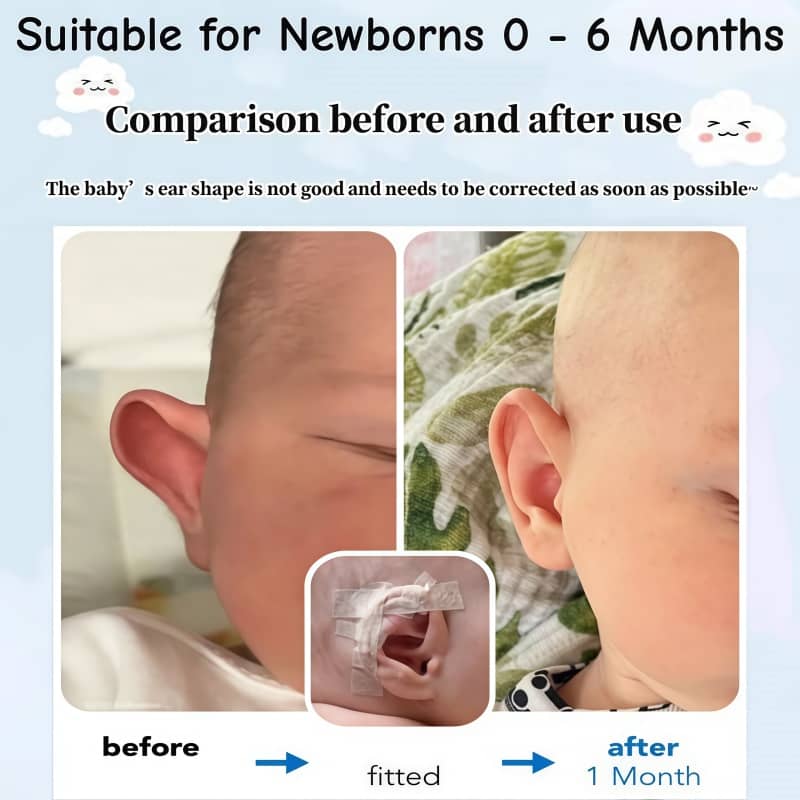
correcting ears that stick out 2