


Blog
Can You Fix Protruding Ears With Tape? | Protruding Ear Tape Guide

Can you fix protruding ears with tape?
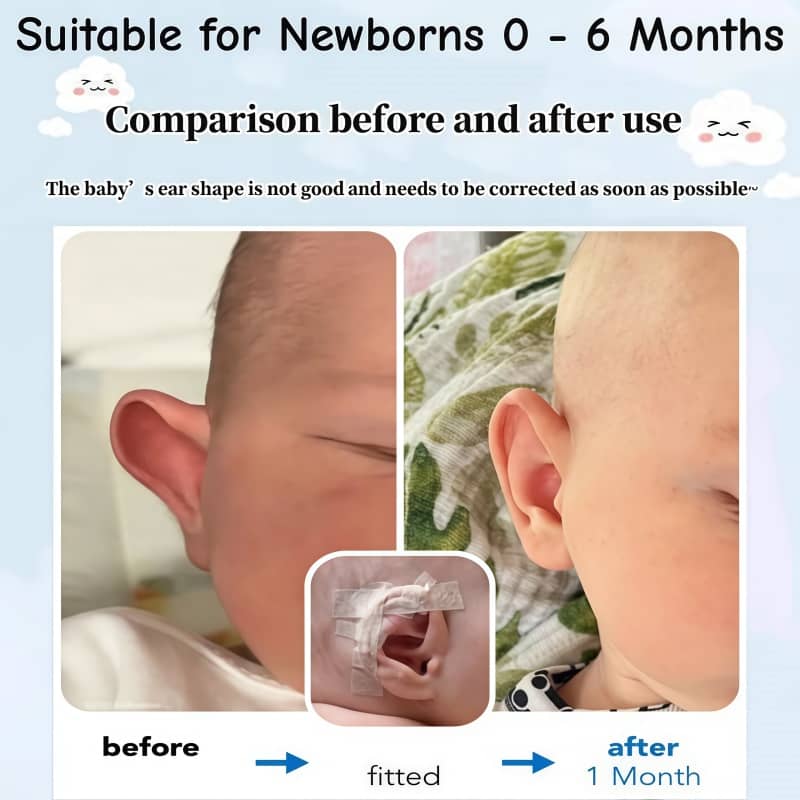
Many parents come across ear‑correction tape online and ask: Can you fix protruding ears with tape? Adhesive tape can serve as part of non‑surgical reshaping for a newborn protruding ear, yet tape is not a universal cure‑all. Its effectiveness heavily depends on the baby’s age, cartilage flexibility, and proper application. It also carries avoidable safety hazards when misused, so parents need realistic expectations before trying this method.
How ear‑correction tape works for a newborn protruding ear
Medical‑grade ear correction tape secures infant ears toward the scalp, helping hold folded cartilage in a natural anatomical position. Used together with soft molding supports, it maintains steady gentle pressure. While newborn cartilage stays pliable under maternal hormone influence, this sustained positioning allows tissue to harden into a better shape over weeks of continuous wear for a protruding ear.
Can adhesive tape alone create permanent change for a protruding ear in older kids?
No. Once infant cartilage hardens after roughly three months old, tape can only hold the ear temporarily in place. After you peel the tape away, the ear will spring back to its original outward‑angled form. Tape cannot reshape rigid cartilage, so it produces zero permanent improvement for older children or adults with a protruding ear.
Conditions where tape may deliver good correction results
Tape‑assisted reshaping works best within the golden neonatal window from 72 hours up to 6 weeks of age. It targets typical folding‑type protruding ear deformities where all ear tissue is fully developed. Even in this optimal period, tape usually functions as a fixing accessory, rather than working completely on its own without additional molding components.
What requirements must a baby meet to use tape for protruding ear reshaping?
The baby must have soft, malleable ear cartilage and intact, healthy skin around the auricle, free from rashes, scratches or eczema. The protruding ear should stem from folded cartilage instead of missing ear tissue. Parents should also receive guidance from medical professionals for correct taping technique before starting home use.
Common safety risks of using tape on infant ears
Newborn skin is extremely thin and sensitive. Even hypoallergenic tape may trigger adverse reactions. Incorrect application, overly tight positioning, or leaving tape on for too long can create preventable harm. Loose tape fragments also present minor choking risks for wiggling infants.
What skin problems can appear when applying tape for protruding ear correction?
Common issues include local red pressure marks, contact rashes, and skin stripping when removing strong adhesive tape. In more serious cases, prolonged adhesion may cause blisters or raw irritated skin. These symptoms require immediate removal of tape and pausing of any protruding ear taping attempts.
Limitations of tape‑only treatment for protruding ear
Many retail products market tape as a standalone solution. However, tape’s main job is securing position; it cannot rebuild missing inner ear folds by itself. Relying purely on tape without professional assessment may waste the limited golden correction window if the taping setup does not properly target the deformed cartilage of a protruding ear.
Is consumer‑grade tape equivalent to clinical infant ear‑molding systems?
No. Clinical ear‑molding systems combine custom silicone conformers alongside medical adhesive tape. Over‑the‑counter consumer tape lacks precision structural supports. While home‑use tape can assist in some simple cases, it cannot fully replicate the controlled pressure of professional clinical kits for protruding ear treatment.
Responsible guidance for parents considering ear correction tape
If you are thinking of using tape for your baby’s protruding ear, seek pediatric or ENT evaluation first. A doctor can confirm whether non‑surgical taping‑assisted molding is suitable for your child. Monitor skin condition frequently if you proceed, and discontinue use right away once any irritation develops. Do not depend only on product advertisements to make treatment decisions.
correcting ears that stick out 2