


Blog
How To Fix Baby Uneven Ears? | Ear Correction Newborn Guide

How to fix baby uneven ears?
Many parents notice that their newborn’s two ears do not look exactly alike and wonder how to fix baby uneven ears. Not all uneven appearance requires intervention. Some minor differences belong to normal human features, while obvious unevenness caused by cartilage deformation can be improved through ear correction newborn. It is important for caregivers to tell the two conditions apart and set realistic treatment expectations.
Distinguish natural asymmetry vs. true ear deformity
Almost every person has subtle differences between left and right ears. For newborn babies, slight size or angle gaps may be temporary due to birth‑related pressure. However, if one ear shows clear structural folding such as protruding, lop or cup‑shaped features, this points to a real deformity rather than harmless natural asymmetry.
Are slight differences between two baby ears always a problem?
No. Minor subtle unevenness is normal for newborns and does not need any reshaping treatment. You only need to keep observing. Intervention such as ear correction newborn is only recommended when the difference is very noticeable and comes from bent cartilage structure instead of trivial natural variation.
Non‑surgical approach for uneven ears with ear correction newborn
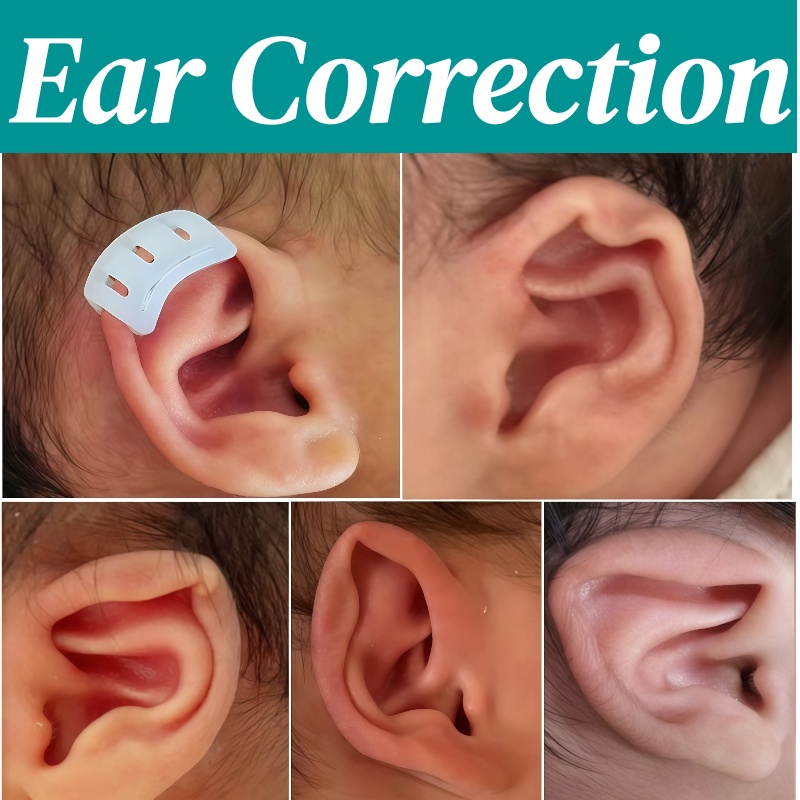
When uneven ear appearance is caused by cartilage‑fold deformations, non‑surgical molding becomes the main solution. Ear correction newborn uses soft silicone accessories and hypoallergenic tapes. It applies gentle constant pressure to reshape the more deformed ear, bringing its shape and position closer to the other healthier ear during the cartilage‑pliable neonatal period.
How can ear correction newborn improve noticeable uneven ear contours?
Ear correction newborn targets the deformed ear by re‑positioning folded cartilage. With consistent daily wear over weeks, soft neonatal cartilage hardens in the corrected form. This reduces the visual gap between the two ears. The goal is to make both ears look balanced, rather than chasing absolute mirror‑image similarity.
Timing requirements for treating uneven infant ears
Just like other infant ear reshaping cases, timing is critical. The optimal window for addressing uneven ears is within the first 6 weeks of life. At this stage, cartilage maintains maximum softness. Limited improvement may still be achievable up to 3 months old, yet the possibility of good outcomes decreases week by week.
Is it possible to fix uneven ears once a baby passes 3 months old?
After three months, ear cartilage has mostly hardened. Ear correction newborn cannot create permanent reshaping any more. Molding devices may produce temporary visual balance, yet ears will return to their original uneven state once accessories are removed. At this point, parents may need to discuss surgical options with pediatric plastic specialists for later childhood.
Limitations of non‑surgical treatment for uneven ears
Parents should understand the boundaries of non‑surgical molding. Ear correction newborn works for deformation where ear tissue is fully formed. If unevenness comes from tissue under‑development or malformation, external molding cannot resolve this condition and needs special reconstructive medical assessment.
Can ear molding make baby’s two ears perfectly identical?
No. Even high‑quality ear correction newborn cannot produce 100% identical ears. Human ears are naturally different. The realistic treatment goal is to reduce obvious visual imbalance and achieve harmonious overall appearance, instead of complete mirror symmetry.
Practical steps parents should take for uneven baby ears
If you spot uneven ears on your baby, take photos for continuous observation. Visit a pediatric or ENT specialist for formal evaluation. Medical experts can judge whether it is natural asymmetry or structural deformity, and advise whether ear correction newborn is suitable for your baby’s unique ear condition.
ear correction newborn