


Blog
How To Reshape Ears Without Surgery? | Infant Ear Correction Guide

How to reshape ears without surgery?
Many parents want to fix their baby’s misshapen ears and hope to avoid surgical operations. Non‑surgical reshaping is achievable for qualified newborns through infant ear correction. This molding method takes advantage of the natural softness of neonatal ear cartilage. However, it has strict limits for age and deformity categories. Understanding the whole process helps parents carry out reshaping correctly while lowering potential safety risks.
Core principle behind non‑surgical infant ear reshaping
Non‑surgical ear reshaping depends on external molding tools instead of scalpels or sutures. Infant ear correction uses soft silicone molds and skin‑friendly adhesive tapes as external supports. These accessories deliver gentle, continuous pressure to hold folded ear cartilage in natural anatomical positions. As the infant grows, cartilage gradually hardens and locks into the corrected shape, realizing permanent reshaping with zero incisions or scars.
What biological condition makes infant ear correction possible?
Shortly after birth, residual maternal hormones keep newborn ear cartilage rich in hyaluronic acid. This biochemical state makes cartilage pliable and responsive to mild sustained pressure. This unique biological window does not last forever. Once hormone levels fade month by month, ear tissue becomes rigid and non‑surgical reshaping loses its effectiveness.
Step‑by‑step workflow for non‑surgical ear reshaping
A complete non‑surgical reshaping process follows clear steps. First, get professional pediatric evaluation to confirm whether your baby qualifies for molding. Next, select matching silicone molding kits and supporting hypoallergenic tapes. Fit and secure the devices properly, maintain long‑duration daily wear, and regularly observe skin and ear shape changes until you finish the full treatment cycle.
What preparation should you complete before starting infant ear correction?
You need to thoroughly clean and dry the skin around baby’s ears so adhesive tapes can attach stably. Inspect silicone components for sharp edges or surface damage. Prepare soft wipes for daily skin inspection. Most importantly, master proper installation techniques via official guidance or specialist advice before placing molds on your baby’s ears.
Which ear conditions respond well to non‑surgical reshaping
Non‑surgical reshaping achieves best results for cartilage‑fold deformations where full ear tissue already exists. Typical treatable conditions include protruding ears, lop ears, cryptotia, cup‑shaped ears, and Stahl’s ear. These anomalies form when cartilage bends abnormally inside the womb, rather than from incomplete tissue development.
What ear issues cannot be improved with non‑surgical infant ear correction?
Infant ear correction cannot fix severe ear malformations such as microtia, where portions of ear tissue are missing. These complex defects require reconstructive surgical assessment. In addition, ear damage caused by external physical trauma also cannot be solved only by external molding accessories and needs formal medical care.
Critical timing requirements for non‑surgical ear reshaping
Timing is one of the most decisive factors. The optimal intervention golden window falls within 6 weeks after birth, when cartilage stays most flexible. Starting infant ear correction during this phase brings highest success rates and shorter overall treatment periods. Every passing week reduces cartilage malleability and lowers expected outcomes.
Can you still try non‑surgical reshaping for babies older than 3 months?
After three months old, infant ear cartilage has mostly stiffened. Even with consistent device wear, infant ear correction can hardly produce permanent reshaping. Temporary position improvement may show while the mold stays on, yet ears will revert back once you remove accessories. In this scenario, you need to discuss surgical otoplasty options with specialists for later childhood.
Safety best practices for home non‑surgical ear reshaping
When conducting home‑based non‑surgical reshaping, inspect your baby’s ear skin every single day. Stop using molding kits right away if redness, rashes or pressure marks appear. Never place silicone splints or tapes over scratched, swollen or eczema‑affected skin. Always seek pediatric assessment before you begin infant ear correction and do not rely purely on product marketing descriptions.
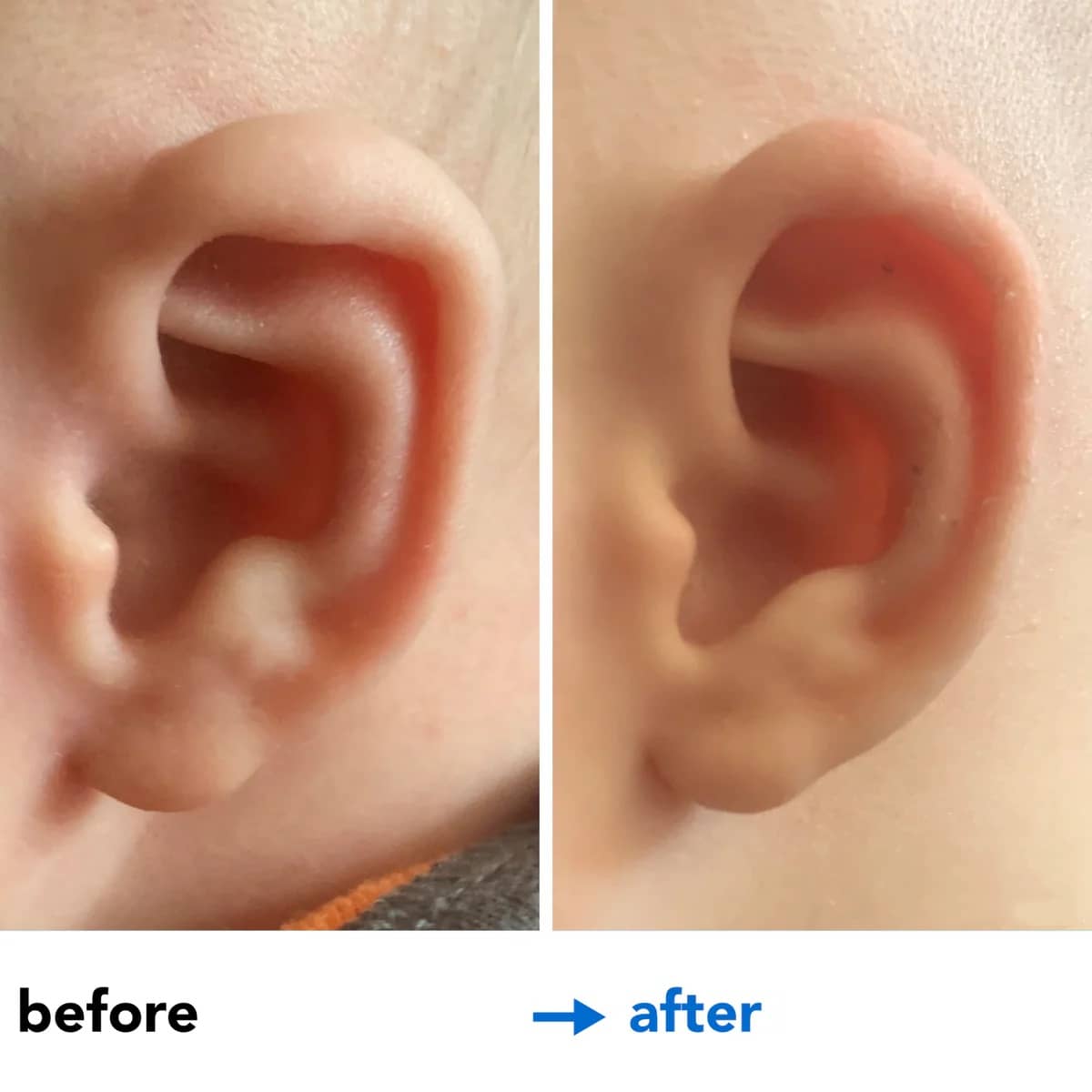
infant ear correction