


Blog
What’s The Best Age To Reshape Ears? | Ear Corrector Infant Guide

What’s the best age to reshape ears?
Many parents with babies who have congenital ear deformities want to know the ideal timing for reshaping. The effectiveness of non‑surgical reshaping heavily depends on infant cartilage flexibility, so age plays a decisive role. An ear corrector infant delivers excellent results within a specific time frame, yet results drop sharply once that period passes. Knowing these age‑related facts helps families avoid missing the best chance for non‑invasive correction.
Why age determines the outcome of infant ear reshaping
Ear reshaping for infants does not rely on external force to bend hard tissue. It works with the natural biological state of cartilage. Shortly after birth, maternal hormones keep cartilage soft and malleable. As these hormones leave the baby’s body week by week, ear tissue gradually hardens and locks into its permanent shape. This natural process sets clear time boundaries for using an ear corrector infant.
What biological change makes ear‑reshaping age‑sensitive?
Maternal estrogen passed to the newborn keeps hyaluronic acid levels high inside ear cartilage, creating soft, bendable tissue. When these hormone levels drop, hyaluronic acid reduces, cartilage becomes rigid, and it loses the ability to remodel under gentle pressure. This natural shift is why non‑surgical reshaping only works well in early infancy.
The golden age window for using an ear corrector infant
The absolute best period to start reshaping falls between 72 hours and 6 weeks after birth. During this window, cartilage reaches maximum pliability. Starting an ear corrector infant within this time produces the highest success rate, shorter treatment cycles, and the most natural‑looking permanent ear contours for folding‑type deformities.
Is 72 hours‑6 weeks the only valid time for ear molding?
It is the optimal window rather than the sole possible time. Starting within 72 hours brings peak performance, but you can still begin correction after that point. However, every additional week reduces cartilage flexibility, requiring longer daily wear and lowering overall success probability.
Acceptable late‑start range and reduced expectations
Some improvement may still be achieved for babies up to three months old. Parents who missed the 6‑week golden window can try an ear corrector infant but need to adjust expectations. Treatment will take more weeks, and full perfect correction cannot be guaranteed for every infant.
Can you still get results if you start at 8‑12 weeks old?
Partial improvement is possible for some babies at 8‑12 weeks, yet outcomes become unpredictable. Individual differences exist: some infants still retain soft cartilage, while others already show obvious tissue stiffening. Professional medical assessment is strongly recommended before investing time in molding at this late stage.
Age threshold when ear corrector infant no longer works
Once babies pass three months of age, most of the maternal hormones have disappeared. Ear cartilage has mostly hardened. At this stage, even consistent daily use of an ear corrector infant cannot create permanent structural reshaping. Ears may temporarily look better while wearing the device but will revert to their original shape after removal.
What options exist once non‑surgical reshaping is no longer possible?
When the cartilage has fully hardened, non‑surgical molding tools cannot deliver permanent changes. For children with noticeable ear deformities, surgical otoplasty performed at an appropriate older age becomes the main viable solution. Parents should consult pediatric plastic specialists to learn about suitable surgery timing and risks.
Practical advice for parents on timing ear correction
If you spot unusual ear shapes on your newborn, do not adopt a “wait‑and‑see” mindset. Book specialist assessment as early as possible. Even if your baby is past the 6‑week mark, seek expert opinion to judge whether an ear corrector infant is still worthwhile for your individual case.
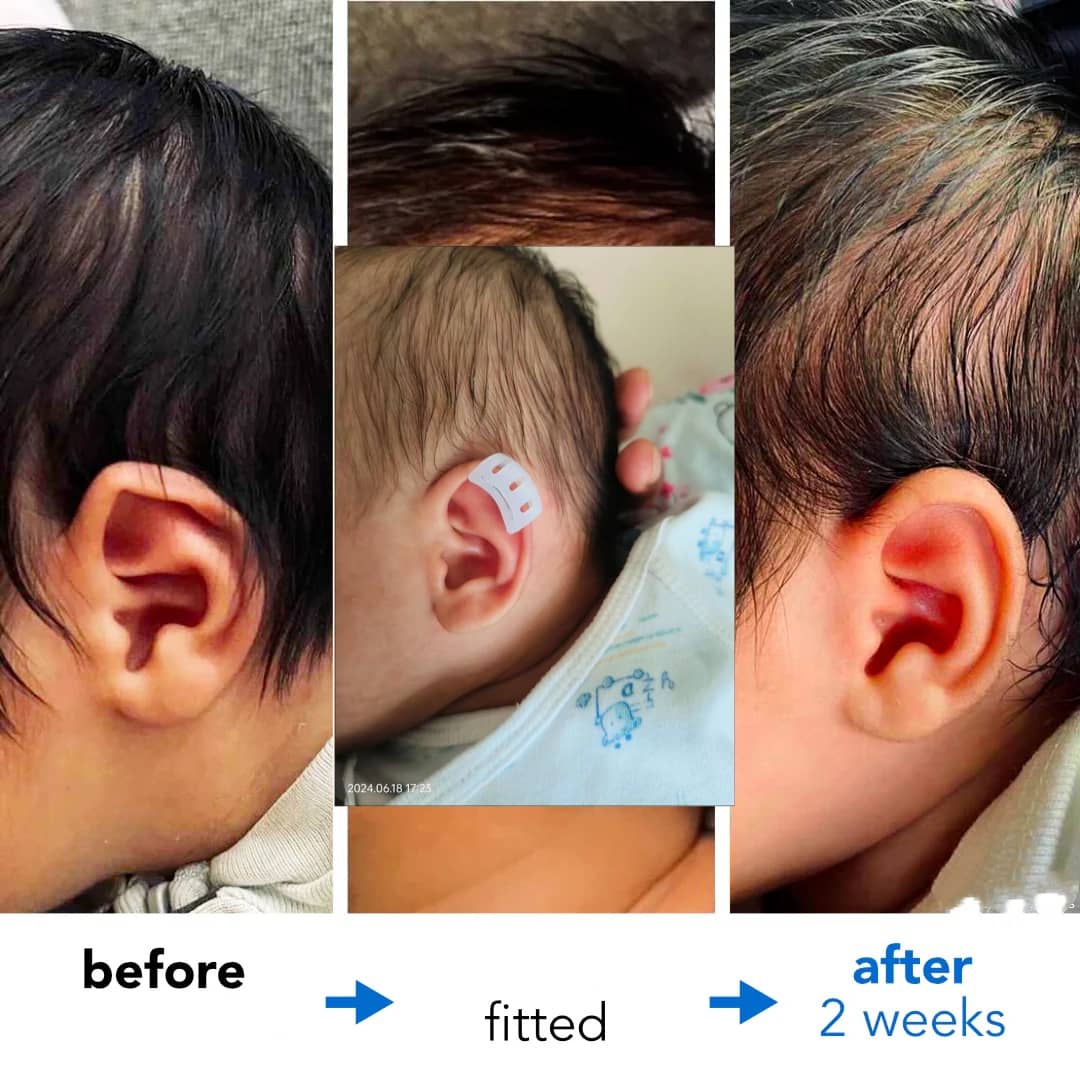
ear corrector infant