


Blog
Can I Still Mold My Baby’s Ears If It’s 6 Weeks Old? | Ear Molding Newborn

Can I still mold my baby’s ears if it’s 6 weeks old?
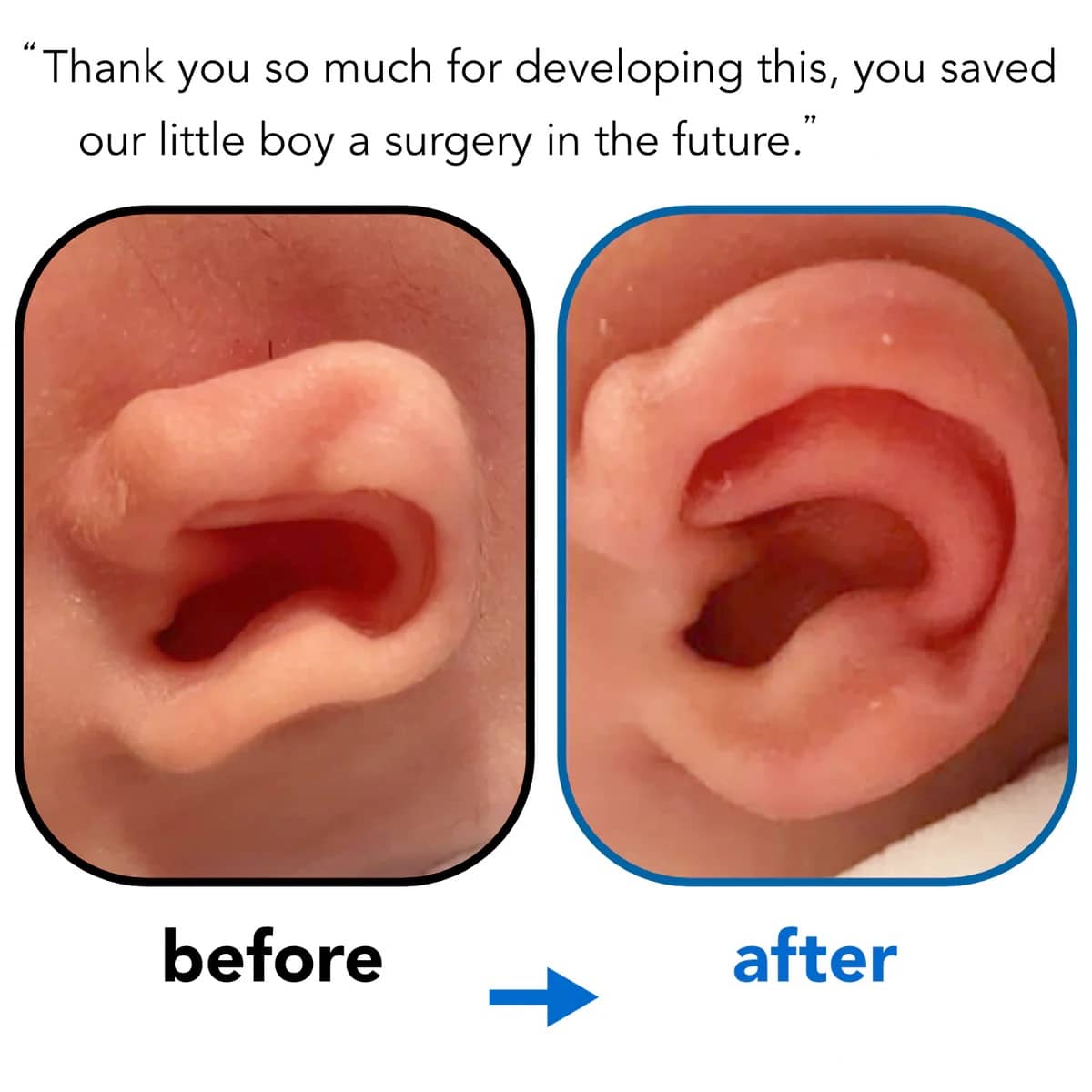
Many parents only notice ear shape irregularities several weeks after their baby is born. When their baby reaches six weeks of age, they frequently ask: can I still mold my baby’s ears at this stage? Ear Molding Newborn can still produce meaningful improvements for many 6‑week‑old babies, yet success is no longer guaranteed. Cartilage begins gradual hardening at this point, so multiple conditions will decide whether non‑surgical reshaping will work effectively.
Is 6‑week‑old within the valid window for Ear Molding Newborn
The absolute ideal time for ear molding is the first few weeks right after delivery. However, six‑week‑old infants are still inside the acceptable intervention range for Ear Molding Newborn. Maternal hormones that soften ear cartilage start to decline around this time, but cartilage still keeps a fair amount of flexibility. This creates the last great chance for non‑surgical correction before tissue becomes rigid month by month.
Why does 6‑week‑old age matter for newborn ear molding?
At six weeks, residual pregnancy hormones are fading away steadily. Each passing week reduces cartilage pliability. If you delay past this phase, you will face lower success rates and need longer daily wear time. Starting Ear Molding Newborn at 6 weeks is possible, but you cannot afford further unnecessary waiting.
Factors that influence molding results for a 6‑week‑old baby
Age alone is not everything. Correction results depend on three key points: what type of ear deformity your baby has, how soft the individual cartilage remains, and whether you keep consistent, correct daily device wear. Even at six weeks, some babies still have very bendable cartilage, while others already show early signs of stiffening.
What ear deformities respond best at 6 weeks of age?
Folded‑cartilage deformities such as protruding ears, lop ears, cup ears, cryptotia and Stahl’s ear still respond well. These issues come from bent cartilage instead of missing ear tissue. Severe tissue deficiency like microtia cannot be improved by Ear Molding Newborn regardless of starting age.
What to expect when starting ear molding at six weeks
Parents should adjust their expectations compared to babies who begin molding within the first two weeks. You may need a longer treatment cycle, and full perfect correction may not always be achievable. Partial improvement of ear contours is a very common realistic outcome for 6‑week‑old infants.
Will ear molding at 6 weeks deliver permanent correction?
Yes, it can be permanent if treatment finishes before cartilage fully hardens. If the molding successfully guides cartilage into natural shape while tissue is still pliable, the new form will stay as the cartilage solidifies. However, partial or incomplete reshaping is also possible and varies per individual baby.
Practical tips for parents starting molding at 6‑week mark
Before buying and applying any molding devices, seek advice from pediatric specialists. Observe baby’s ear skin every day for redness or pressure irritation from silicone molds and adhesive tapes. Strictly follow recommended wearing schedules, irregular or intermittent use will sharply reduce correction effectiveness for 6‑week‑old babies.
What signs mean ear molding is no longer worth trying?
If your baby’s cartilage feels firm and rigid to touch, or you have already passed 3 months of age, Ear Molding Newborn rarely delivers meaningful permanent changes. In these situations, non‑surgical molding will waste time, and you may need to consider surgical options for later childhood.
Final advice for 6‑week‑old baby ear reshaping
To sum up: you can try Ear Molding Newborn for your 6‑week‑old baby, and many families get satisfying improvements. Nevertheless, this is near the tail‑end of the optimal treatment window. Do not postpone consultation. Get professional assessment quickly to confirm whether your baby is still a good candidate for non‑surgical ear reshaping.
Ear Molding Newborn