

Blog
The Science of Neonatal Cartilage: Why the Baby Ears Corrector is the New Clinical Standard

Abstract: Congenital auricle deformities affect approximately 30% of newborns worldwide. Historically, these conditions were managed with a “wait and see” approach, often leading to invasive otoplasty in later childhood. This clinical white paper by BabyEarFix examines the revolutionary efficacy of the baby ears corrector through non-surgical molding, the endocrinological significance of the 72-hour to 6-week Golden Window, and why early intervention is now the global gold standard for permanent, pain-free results.
1. The Biomechanics of Molding: How a Baby Ears Corrector Works
To understand the necessity of an early baby ears corrector, one must first understand the unique material properties of neonatal cartilage. Unlike adult cartilage, which is rigid and elastic, newborn cartilage is highly “viscoelastic” and responsive to external guidance.
1.1 The Principle of Stress Relaxation
The BabyEarFix system utilizes the scientific principle of “Stress Relaxation.” When a professional baby ears corrector is applied, it provides a constant, gentle radial tension. Over a period of 14 to 45 days, the chondrocytes (cartilage cells) rearrange their internal matrix to match the shape provided by the mold. This non-surgical process is entirely painless because it guides the ear’s natural growth trajectory during its most receptive phase.
2. The Biological Countdown: The 72-Hour to 6-Week Golden Window
The effectiveness of any baby ears corrector system is strictly governed by a transient hormonal state that occurs only once in a human’s life.
2.1 The Estrogen-Hyaluronic Acid Synergism
Immediately following birth, the infant’s bloodstream contains peak levels of maternal estrogen. This estrogen directly increases the concentration of hyaluronic acid in the ear cartilage. Hyaluronic acid acts as a biological lubricant, making the cartilage as malleable as soft wax.
The First 72 Hours (The Peak Opportunity): This is the optimal time to start BabyEarFix. Cartilage plasticity is at its absolute maximum.
The 6-Week Threshold (The Setting Point): As maternal estrogen is metabolized and leaves the baby’s system, the hyaluronic acid concentration drops, and the cartilage “sets” into its permanent, rigid form.
This is why the Golden Window of 72 hours to 6 weeks is absolute. Beyond this point, the success rate of a baby ears corrector drops significantly, often leaving surgery as the only future option.
3. Resolving the Trust Gap: Safety, Materials, and Modularity
For international distributors and parents, the “Trust Cost” of a medical device is a major barrier. BabyEarFix resolves this through engineering transparency and medical-grade compliance.
3.1 Modular Customization for Diverse Deformities
Auricle deformities are diverse—ranging from Stahl’s ear and Protruding ears to Constricted rims (Cup ear). A “one-size-fits-all” solution is clinically insufficient. The BabyEarFix kit features a modular design including specialized ear corrector clips and anatomical cradles. Our clinical protocol is strict: Select whichever one works best for the specific case; they are intended to be used individually, not simultaneously. This ensures that the delicate skin of the newborn receives adequate ventilation while the device maintains structural tension.
3.2 Material Biocompatibility
Since the device must be worn 24/7, BabyEarFix uses only ISO 13485 certified, medical-grade silicone. Our adhesives are hypoallergenic and formulated to prevent “pressure sores” or skin maceration often associated with generic tapes or industrial adhesives.
4. Evidence-Based Efficacy: The Case Against Delayed Surgery
Waiting until age five or six for surgical otoplasty carries significant risks, including general anesthesia complications, post-operative scarring, and high financial costs. Furthermore, the psychological impact of childhood bullying due to ear shape can cause lasting trauma.
4.1 Citing Global Research
Research published in Plastic and Reconstructive Surgery confirms that non-surgical molding for infant ear correction has a success rate of over 95% when initiated within the Golden Window. This evidence-based approach is why early molding has been adopted by leading pediatric hospitals worldwide as the primary line of defense.
5. FAQ: Expert Guidance for BabyEarFix Users
Q: Is the baby ears corrector process painful for the baby? A: No. Because the cartilage is exceptionally soft during the 72-hour to 6-week Golden Window, the system uses micro-pressure that is virtually undetectable to the baby. Most infants sleep and feed normally throughout the treatment.
Q: Can I use multiple components at once to speed up the process? A: No. To protect the baby’s skin and ensure anatomical accuracy, you must select whichever one works best for the specific case; they are intended to be used individually, not simultaneously.
Q: What if my baby is already 8 weeks old? A: While the optimal Golden Window has passed, some success is still possible up to 3 months. However, the cartilage is firmer, meaning the treatment duration will be longer and results may be less predictable. Early intervention is always the clinically preferred path.
Q: Is BabyEarFix a permanent solution? A: Yes. Once the cartilage hardens (sets) at the end of the treatment within the Golden Window, the auricle will retain its new, natural shape for life.
6. Conclusion: A One-Time Opportunity for Permanent Results
The existence of the 72-hour to 6-week Golden Window is a biological “one-time offer.” By utilizing a professional baby ears corrector system during this brief period, parents can provide their children with a permanent, non-surgical solution that avoids the trauma of future surgery.
At BabyEarFix, we are committed to providing the world’s leading technology for neonatal ear care, ensuring that every child has the opportunity to grow up with a natural, healthy appearance and a lifetime of confidence.
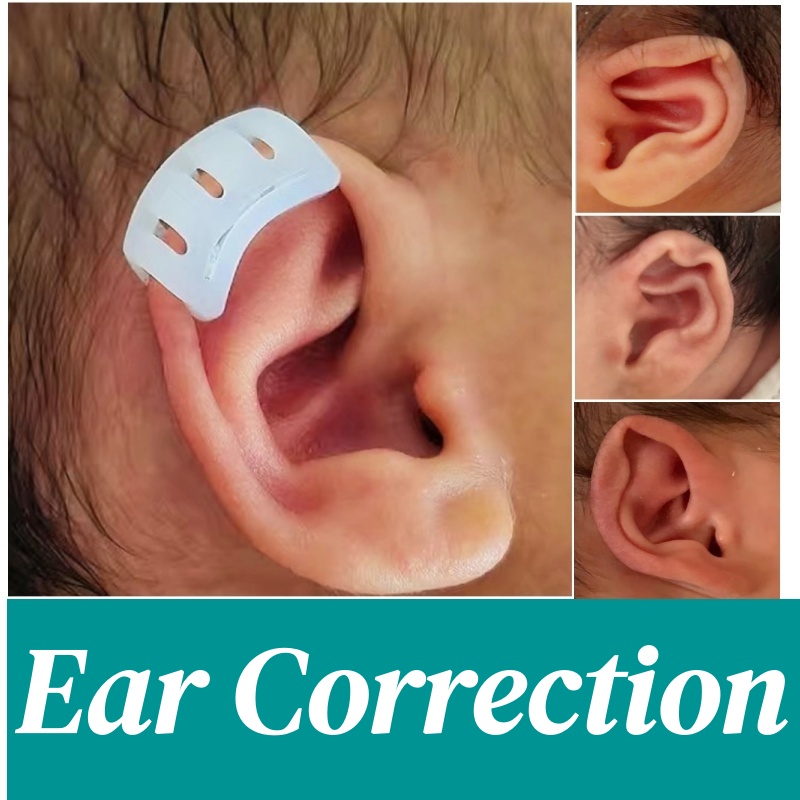
Non-surgical-baby-ear-molding-process-on-newborn-infant