

Blog
Beyond Aesthetics: The Clinical and Psychological Case for the Ear Corrector for Babies

Abstract: Congenital auricular deformities, often oversimplified as “cosmetic traits,” carry significant implications for a child’s psychological development. This article by BabyEarFix delves into the science of an ear corrector for babies, explaining the biomechanical shift from invasive otoplasty to early non-surgical molding. By targeting the 72-hour to 6-week Golden Window, we offer a permanent solution that respects the natural physiology of neonatal cartilage.
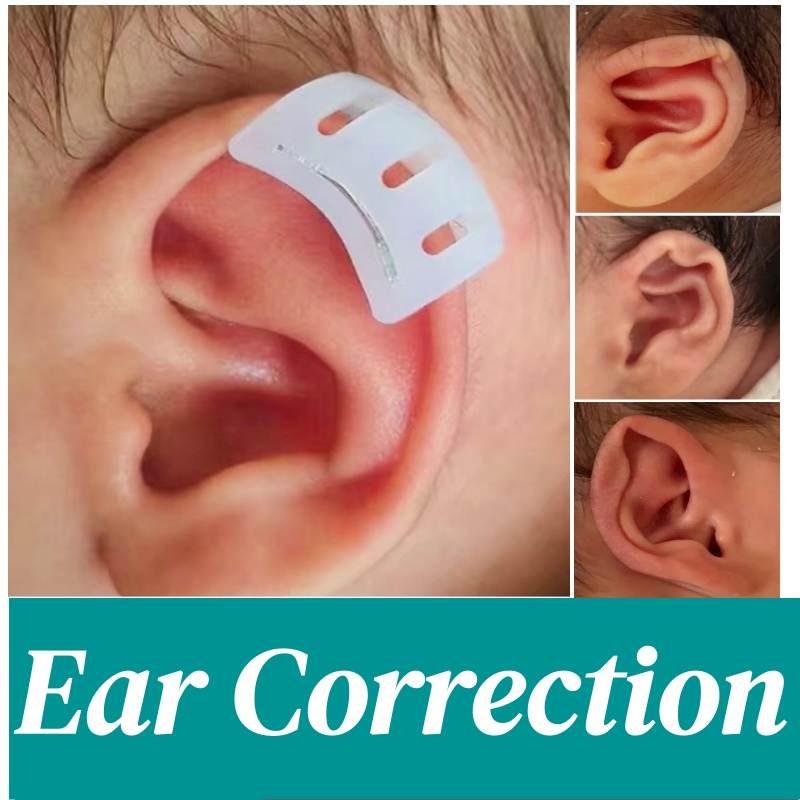
Infant-wearing-medical-grade-ear-corrector-for-babies-during-sleep
1. The “Wait and See” Fallacy: A Psychological Perspective
For decades, many pediatricians advised parents to ignore minor ear misshaping. However, modern child psychology suggests that physical “differences” in ear shape, such as protruding or “stick-out” ears, can become a source of social anxiety and bullying as early as age five.
1.1 The Proactive Parenting Shift
Choosing an ear corrector for babies is no longer just about “looks.” it is about psychological safeguarding. By initiating infant ear correction before a child enters a social environment, parents eliminate the trauma of future surgery and the potential for self-consciousness. BabyEarFix empowers parents to act during the only period when correction is painless and permanent.
2. The Micro-Pressure Biomechanics: How it Works
The efficacy of an ear corrector for babies lies in the application of “micro-pressure.” Unlike the traumatic force of surgery, molding uses low-constant tension.
2.1 The Role of Anatomical Scaffolding
The BabyEarFix system utilizes a modular approach:
The Base Cradle: Provides a structural foundation to hold the ear closer to the temporal bone.
The Tailored Adjusters: These components, such as the ear corrector clip, allow for fine-tuned adjustments to the antihelical fold or the helical rim.
Clinical Instruction: Each infant’s deformity is unique. Parents should select whichever one works best for the specific case; they are intended to be used individually, not simultaneously. This ensures the skin remains healthy while the cartilage is reshaped.
3. The Biological Mandate: The 72-Hour to 6-Week Golden Window
Why is the ear corrector for babies only effective in early infancy? The answer lies in the baby’s biochemistry.
3.1 Hyaluronic Acid and Maternal Estrogen
In the first 72 hours after birth, maternal estrogen levels in the baby are at their peak. This hormonal surge maintains a high concentration of hyaluronic acid in the ear cartilage, keeping it as pliable as soft modeling clay.
3.2 The Setting Point
By the time a baby reaches 6 weeks, estrogen levels normalize, and the cartilage “sets” or hardens. This is why the Golden Window of 72 hours to 6 weeks is the only time ear correction without surgery can be guaranteed. If you miss this window, the cartilage becomes too rigid for an ear corrector for babies to be effective, leaving surgical intervention as the only remaining path.
4. Resolving the Trust Gap: Material Safety and Clinical Data
When introducing a medical device like an ear corrector for babies into a household, trust is the primary barrier.
4.1 Medical-Grade Standards
BabyEarFix uses only ISO 13485 certified, biocompatible silicone. Our adhesives are specifically formulated for the ultra-sensitive skin of a newborn, ensuring 24/7 wear is possible without causing irritation or “pressure sores.”
4.2 Citing Global Research
Studies published in The Journal of Craniofacial Surgery indicate that non-surgical molding with an ear corrector for babies has a success rate of over 90% when started within the first month. This evidence-based approach is why infant ear correction has become the gold standard in modern pediatric aesthetics.
5. FAQ: Expert Advice for New Parents
Q: Is an ear corrector for babies better than surgery? A: Yes, if used within the Golden Window. It is non-surgical, requires no anesthesia, leaves no scars, and is significantly more cost-effective than surgical otoplasty.
Q: My baby is already 2 months old. Is it too late? A: While the optimal window is 72 hours to 6 weeks, some success is possible up to 3 months. However, the cartilage is firmer, meaning the treatment duration will be longer and the final result may be less than 100% perfect.
Q: Can I use multiple clips at once to speed up the process? A: No. To protect the delicate skin, you must select whichever one works best for the specific case; they are intended to be used individually, not simultaneously. Consistency of wear is more important than the amount of pressure.
Q: Is the device visible under a hat? A: The BabyEarFix system is low-profile. It can easily be covered by a light baby beanie, allowing for discreet correction during outings.
6. Conclusion: A One-Time Opportunity for a Lifetime of Confidence
The development of the ear corrector for babies has transformed neonatal care. By understanding the biological Golden Window (72 hours to 6 weeks) and utilizing the precision of BabyEarFix, parents can resolve ear deformities permanently and painlessly.
Don’t wait for your child to ask for surgery at age six. Give them the gift of a natural, healthy appearance today with a professional ear corrector for babies.